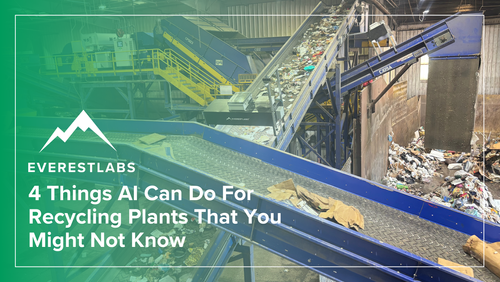
AI is best known in recycling for powering robots on the sorting line or conducting material audits, but its impact on MRF operations goes far beyond those two use cases. Here are four lesser-known ways AI is helping facilities run more efficiently.
Most MRF operators assume their facility is running at or near capacity. The reality? The average plant has significant untapped throughput sitting idle, and until recently, there was no easy way to see it.
AI changes that. By continuously monitoring material flow across every shift, AI gives operators a precise, real-time picture of how much material is running on their belts. AI builds a detailed picture telling you when your belts are running at peak capacity, when they're underloaded, and what conditions correlate with each.
By understanding load patterns across shifts, MRFs can run more efficiently, process more material in the same amount of time, and capture previously untapped revenue. With this visibility, operators can make targeted adjustments: rebalancing shift schedules, optimizing material intake timing, or adding additional commercial contracts to fill belt time that was previously underutilized. By seeing exactly how much material moves through per shift, you can push your plant 25–30% harder without adding more equipment or labor. This means more money in your pocket.
In one real-world example, AI identified within just five days of monitoring that a facility was operating at 80% belt utilization — leaving a full 20% of capacity unused. For a facility of that size, closing that gap represented $2 million in untapped tipping fee revenue annually.
In a MRF, equipment doesn't fail at convenient times. By the time something breaks, you're already behind, scrambling to diagnose the problem, source parts, and get back online while material piles up and tipping schedules slip. This is the reality of reactive maintenance. And for most facilities, it's still the default.
Rather than waiting for a failure to surface, AI can detect when equipment needs replacing and spot early warning signs before a failure happens, shifting your maintenance posture from reactive to proactive.
When something starts to drift outside normal parameters, the AI monitoring system can flag it. Not after it fails. Before. Operators and maintenance teams receive alerts that give them time to schedule a repair during a planned window, order parts in advance, and address the issue before it becomes an emergency.
Unplanned downtime is one of the most expensive line items in MRF operations, and it's also one of the most preventable. Half a day of downtime can cost $10K. AI can prevent this. From instant failure alerts to predictive maintenance, AI keeps your equipment running, your downtime to a minimum, and your operations on schedule.
With commodity prices constantly changing, recovering the highest volume of material is critical for profitability. AI can help your facility recover up to 25% more material and add hundreds of thousands in profit.
How? Current sortation methods, whether they are manual or automated, still allow significant amounts of recyclable material to end up in landfill. This can be due to equipment not working at peak performance, changing material conditions or material types, weather conditions, and even belt speed. AI helps recyclers respond to these variables in real time by identifying when screens need tuning, belt speeds should be adjusted, or optical sorter settings need to be recalibrated based on incoming material conditions and variability. By ensuring every part of your operations is running at peak performance at any given time, you are able to recover more material than before.
AI-driven data can support contract renegotiation, pinpoint investment opportunities, improve processes, simplify corporate and municipal reporting, and replace manual audits, all from the same data stream your facility already generates.
Whether you're dealing with contamination questions, performance reviews, or operational issues, AI gives you clear evidence to act.
For example, most contracting decisions are based on manual sampling of just 100 pounds of material collected during a single month of the year. These are major business decisions being made from a very limited snapshot of data. With AI continuously collecting and analyzing information every day of the year, facilities gain a far more comprehensive and accurate view of their material streams, providing them with the data needed to negotiate contracts with greater confidence.
As AI adoption grows across the industry, these capabilities are helping MRFs transform data from their material streams into actionable intelligence, improving performance across the entire plant.
We are pleased to introduce the EverestLabs AI solutions, purpose-built for recycling plants, to help your plant benefit from the power of AI. Stay tuned for more announcements or contact us at hello@everestlabs.ai!