The demand for post-consumer recycled (PCR) content has been steadily increasing and shows no signs of slowing. In recent years, many consumer packaged goods (CPG) brands have made commitments to incorporate PCR into their packaging, while certain states have also begun mandating its use for specific plastic types.
For example, California requires that plastic beverage containers sold in the state must contain at least 25% PCR between 2025 and 2029, and then the requirement will grow to 50% by 2030. And Washington State will require that plastic beverage containers contain 25% or more PCR plastic content by 2026.
Between 2018 and 2023, CPG brands increased the amount of recycled content in their plastic packaging from approximately 5% to 13%, and experts from Ameripen are expecting PCR demand to only increase as more goals will be announced and more legislation will be put in place. The demand is there—both from brands and legislatures—but the supply chain and recycling infrastructure have not kept pace, resulting in a lack of PCR for sustainable packaging.
Rob Keith, Ameripen’s membership and policy director, explains, “Goal demand and actual PCR use have not developed at an equal pace, highlighting infrastructure and supply chain shortfalls, especially in plastics.” How do we fix this?
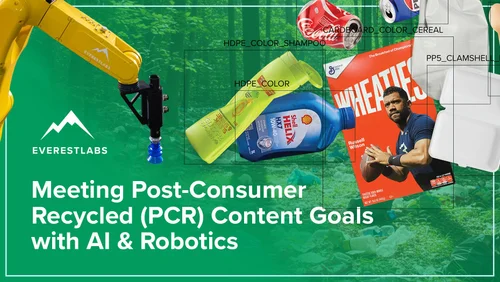
The key to closing that gap lies in improving the efficiency and output of material recovery facilities (MRFs) and reclaimers. By integrating AI and robotics into these systems, we can significantly boost the recovery of high-quality recyclables, including the types of plastics needed to meet PCR targets. With more materials entering the recycling stream, we can drive down the cost of PCR, currently more expensive than virgin plastics, making it a viable option for more brands.
And price matters. In a recent study conducted by EverestLabs, 17.9% of consumers said they would always choose a product with sustainable packaging, but a larger share—32.4%—said they would do so only if it were affordable. Increasing the supply of recycled materials not only helps brands meet their sustainability goals but also empowers consumers to participate in sustainable consumption. It’s a win-win-win for brands, consumers, and the environment.
Of course, PCR materials don’t come without challenges. They can vary in color and texture compared to virgin materials, posing aesthetic concerns for brand consistency. But brands that want greater control can take proactive steps by partnering with recovery operations to ensure the collection and sorting of specific materials that match their needs.
The road to a circular economy isn’t without obstacles, but it’s one paved with innovation, partnerships, and investment in smarter recycling infrastructure. With AI and robotics as key enablers, brands don’t have to choose between sustainability and performance. They can have both.
Interested in learning more about how AI and robotics can help packaging manufacturers and/or brands? Check out our blog, Meeting Your Packaging Sustainability Goals with AI, or schedule a time to meet with us!