

The push toward circularity and sustainability continues to gain momentum worldwide, and that focus was on full display at RWM 2025. Circularity emerged as one of the event’s defining themes, underscoring how industries and governments alike are rethinking systems to keep resources in use for longer. At the heart of this transition lies waste management and recycling—sectors now rapidly adopting modern technologies and programs to align with a circular future.
This year’s event showcased a wide array of innovations designed to advance recycling and resource recovery. Exhibitors demonstrated tools to modernize waste operations, while conference sessions highlighted strategies to boost efficiency, productivity, and material quality across the recycling industry. Together, these conversations reinforced the industry’s growing recognition that cutting-edge technologies are key to strengthening the circular economy.
One of these sessions came from EverestLabs CEO & Founder, JD Ambati, who spoke on the Circularity Stage about the role of artificial intelligence (AI) in optimizing resource recovery. He explained that as material recovery facilities (MRFs) face mounting pressure to improve recovery rates, “they are also grappling with major challenges—including high contamination in recycling streams, aging equipment, rising labor costs, and volatile end markets.” Throughout his presentation, Ambati highlights how AI is emerging as a powerful tool to help MRFs solve these challenges.
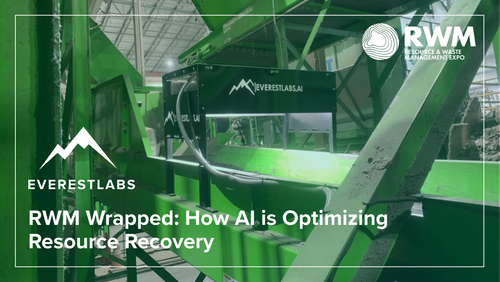
During his presentation, Ambati described how AI can be seamlessly integrated into existing MRF infrastructure—without the need for costly retrofits—and the many ways it improves operations. JD Amabti explains, “From real-time plant visibility to automated sorting systems, AI is helping facilities uncover inefficiencies, monitor material quality, reduce contamination, and ultimately future-proof operations.”
Attendees also gained insight into the kinds of data AI systems can capture across the sort line, and how that data empowers operators to make smarter, faster decisions. By enabling proactive facility-wide monitoring, JD highlighted that AI shifts MRFs away from reactive problem-solving toward a model of continuous improvement and optimization.
With RWM 2025 offering a glimpse into the next era of recycling technology, it’s clear that AI will play a central role in shaping the industry’s future. From driving efficiency to strengthening the circular economy, the innovations shared this year signal an exciting path forward.
As the show wrapped up, one thing was certain: the momentum toward circularity is accelerating—and we’re eager to see what RWM 2026 brings.