The U.S. produces 268 million tons of waste each year, with 140 million tons (52%) heading straight to landfills. The average American throws away 4.5 pounds of trash daily, and much of that consists of recyclable materials that, if properly managed, could be reintegrated into the circular economy. However, these materials often fail to be recovered. In this blog, we explore why such gaps persist and, more importantly, how technology and innovation can help close them.
EverestLabs recently conducted a survey to better understand public attitudes toward sustainability and recycling. We sought to identify current recycling behaviors, the impact of eco-conscious sentiment on decision-making, and the effectiveness of existing recycling programs. This blog will highlight key insights from our findings and explore how technological solutions, including EverestLabs’ AI and robotics, are bridging the gap between what can be recycled and what is recycled, ultimately enhancing material recovery.
A circular economy is designed to keep products and materials in use for as long as possible by reusing, recycling, or remanufacturing them. This approach minimizes waste, reduces greenhouse gas emissions, and promotes sustainable consumption and production.
The global waste crisis is intensifying. According to the UN, municipal solid waste (MSW) is projected to rise from 2.1 billion tonnes in 2023 to 3.8 billion tonnes by 2050. Shockingly, only 9% of plastic waste is recovered. Though recycling alone won’t solve this crisis, it is a key part of the solution, and emerging technologies like AI and robotics are essential to optimizing material recovery and recycling efficiency.
In the U.S., only 21% of residential recyclables are processed, while 76% end up in landfills without ever reaching sorting facilities, according to The Recycling Partnership's State of Recycling Report. Our survey revealed that while 40.7% of respondents recycle daily, 34.3% recycle less than a few times a month or never at all. This highlights the need to increase participation in daily recycling to raise overall recovery rates.
There’s a disconnect between what people believe is being recycled and what actually is. While 85.9% of respondents agree that recycling benefits the environment, most overestimate the actual recycling rates. A significant portion of respondents believe that 40-59% of materials in recycling bins are recycled, but in reality, 70-80% are properly processed, with the rest heading to landfills. Bridging this gap is critical for improving recycling systems and achieving circularity.
A major barrier is confusion over what can and cannot be recycled. When uncertain, 51.8% of people try to recycle an item (a practice known as “wishcycling”), while 48.2% throw it away. However, wishcycling can contaminate recycling streams, making facilities less efficient and even causing them to shut down, as was the case in Milton, Florida, where contamination led to the closure of its recycling program.
To support the circular economy, it’s crucial to stay informed about local recycling guidelines, which are often available on municipal websites.
While 17.9% of survey respondents said they would always choose a product with sustainable packaging, 32.4% noted they would do so only if it were affordable. Unfortunately, the high cost of recycled materials can make eco-friendly packaging more expensive. This is where AI and robotics come in. By improving the sorting accuracy and reducing contamination in recycling facilities, these technologies lower processing costs, making recycled materials more affordable for brands and consumers alike.
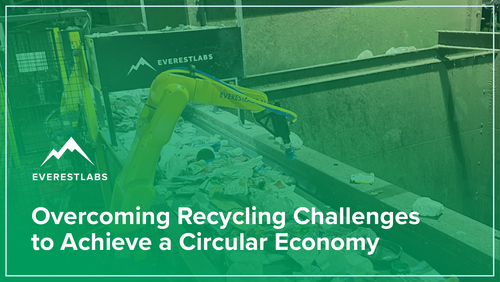
EverestLabs' AI and robotics system, RecycleOS, is revolutionizing recycling operations. RecycleOS addresses inefficiencies in materials recovery facilities (MRFs), boosting plant efficiency by 30-50% and increasing material recovery by 2-3 times through automation. By providing valuable data insights, RecycleOS enables MRFs to optimize their processes, recover more recyclables, and reduce their costs.
Moreover, RecycleOS helps brands meet sustainability goals by ensuring a steady supply of high-quality recycled materials for packaging, which is critical for complying with legislation like Extended Producer Responsibility (EPR). EPR requires brands to take financial responsibility for the recovery and recycling of their packaging, encouraging the use of recyclable materials and driving circularity.
The Recycling Partnership’s 2024 report shows that only 73% of U.S. households have access to recycling services, and of those, just 43% actively participate. Increasing public awareness about proper recycling practices and expanding access are vital steps to closing the gap between current recycling rates and the broader goal of circularity.
Educating consumers on how to recycle correctly will reduce contamination and improve recycling system efficiency. Meanwhile, AI and robotics will continue to play a key role by enhancing sorting processes and increasing recovery rates in recycling facilities.
Achieving a circular economy requires collaboration among consumers, governments, brands, and the recycling industry. While challenges like limited access to recycling, misinformation, and high costs of recycled materials persist, advancements in technology and supportive legislation are paving the way toward circularity. As organizations continue to innovate, the integration of AI, robotics, stronger policies, and public education will create a more sustainable future where resources are used efficiently and waste is minimized.
To dive deeper into this, download our white paper.